
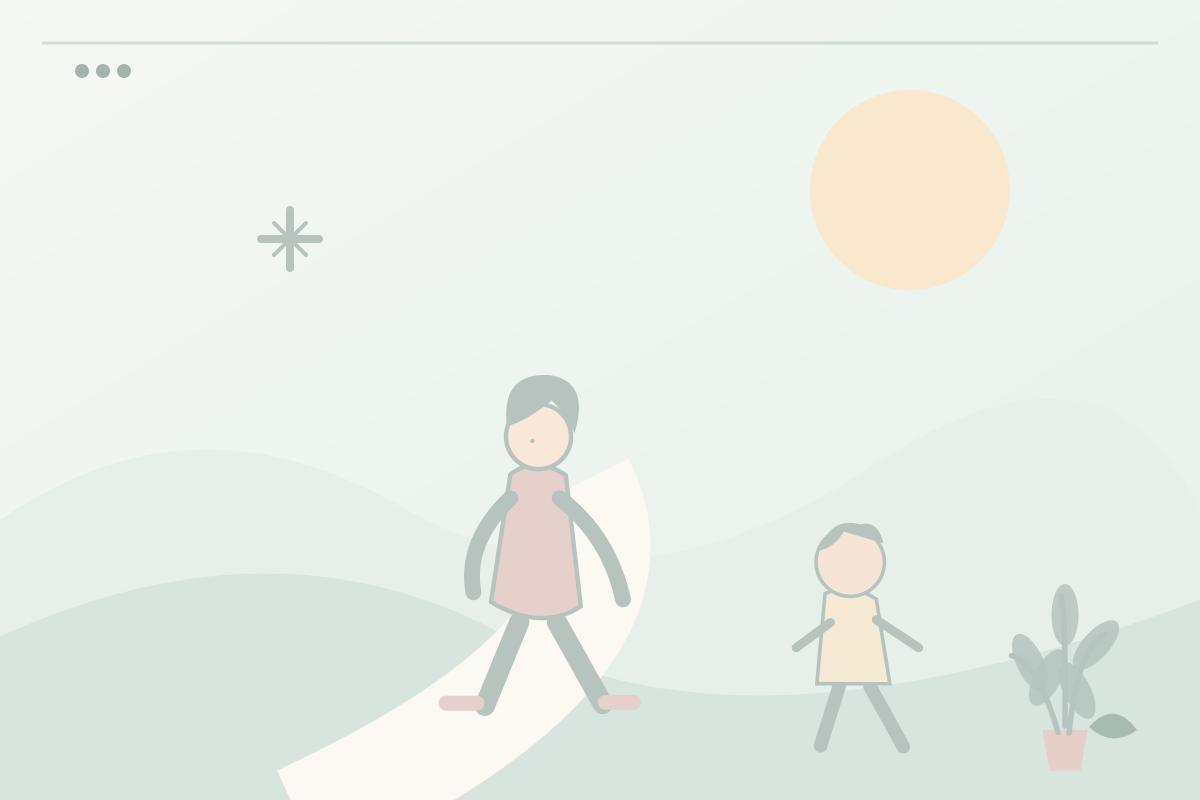
A walk with young children is rarely a scaled-down version of an adult fitness walk. The interesting part may be a flower beside the footpath or watching a bus turn a corner. Letting the pace change can make the experience enjoyable for everyone, as long as the route and supervision remain safe.
Plan a small loop
Start with a familiar route close to home, with a safe place to turn around. A twenty-minute adult walk may take much longer with a toddler, so leave room for stopping. Avoid paths with unsafe crossings, steep drops or difficult surfaces for the children in your group. Consider accessible facilities if you are using a pram or mobility aid.
Give the journey a destination
A letterbox, a playground, a bench under a tree or a local library can make the walk feel like an outing rather than an exercise target. You can offer a small choice between two safe routes. When possible, let your child decide which flowers to look at or which bird to listen for. The destination should stay simple enough that turning back isn't disappointing.
Bring only the sensible essentials
Water, appropriate clothing, sun protection and any feeding or care items needed by your family are a reasonable starting point. Use a correctly fitted pram or carrier according to the instructions, and supervise children near traffic and water. On hot days, check local conditions and consider postponing rather than insisting on the planned distance.
Leave room for another kind of pace
Some children want to walk while others need to be carried or rest. Children with disabilities may need a different route, equipment or timing. A family outing should serve the people coming along rather than an arbitrary distance. If the day isn't right for walking, sitting outside or visiting an accessible indoor venue can still be worthwhile.
Finish before everyone is depleted
Plan the return leg early enough that tiredness isn't the only memory of the trip. When you get home, talk about one thing you noticed: a dog, a fountain, a painted wall. A short walk that ends happily is often easier to repeat than a longer one that becomes a struggle.
A path with several good stopping points
Suppose a fifteen-minute loop passes a patch of flowers, a bench and a quiet park. Those three things are your flexible destinations. A toddler may want to stop at the first one, so you can shorten the route without losing the point of the trip. Bring what you need to respond to the weather, and choose a safe crossing before you leave. If a child needs rest, a suitable pram or another accessible option might make the outing possible. The walk is a chance to share attention, not a test of distance.