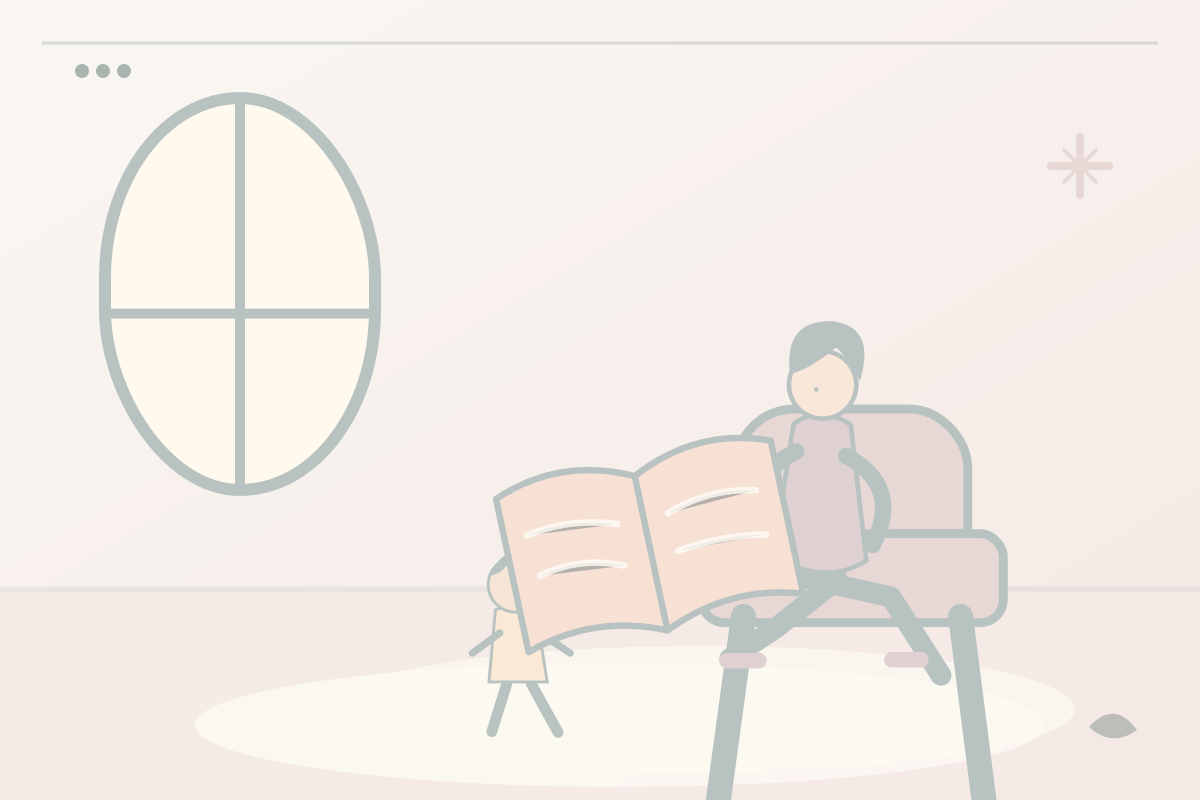
The picture of reading together is often a quiet child curled up for a whole story. Real toddlers may stand up, turn backwards through the book, point at the same dog on six pages and wander off mid-sentence. That can still be a perfectly good moment with a book.
Let them choose the book
Put a few sturdy, age-appropriate books where your toddler can browse and point to one. Board books with familiar objects, rhyme or repeating phrases often invite participation. You don't need a large library or the newest titles. Borrowing from a public library can make changing interests easier to explore without buying more books.
Look at pictures instead of finishing pages
If your child points at a red truck, talk about the truck. You can name a colour, make a sound or ask what happens next. The printed sentence is not a script you have to finish before moving on. Raising Children Network encourages talking about the pictures and letting children join in; the interaction matters as much as the words on the page.
Make repetition welcome
A favourite story might appear every night for several weeks. Familiar lines let a toddler anticipate the next sound or action. You could pause before a repeated word and see whether they join in, or let them turn the pages. There's no obligation to introduce a new learning goal every time you open a book.
Find an ordinary reading moment
A few minutes before bed, after breakfast or while waiting in a safe place can be enough. If your toddler prefers to move, read a page while they're nearby and see whether they come back. Respect their attention and don't turn reading into a battle. You can also tell a familiar story without a book at all.
Be curious about their response
Some children talk a lot about pictures; others listen, gesture or look briefly before moving on. Follow their lead and avoid comparing their response with another child's. If you have questions about hearing, speech or broader development, speak with an appropriate professional for individual guidance.
What a five-minute story might be
You open a book and your toddler points straight to the page with a dog. You talk about the dog's ears, make a barking sound and turn the page back when they ask. Perhaps they get up and bring you another book before the first has ended. That's still shared reading. You can return to the story another day. A public library visit may help you find books with flaps, repetition or familiar pictures that catch your child's interest, provided the book is age-appropriate and safe for them to handle.